

+919860311630

Currently it only shows your basic business info. Start adding relevant business details such as description, images and products or services to gain your customers attention by using Boost 360 android app / iOS App / web portal.

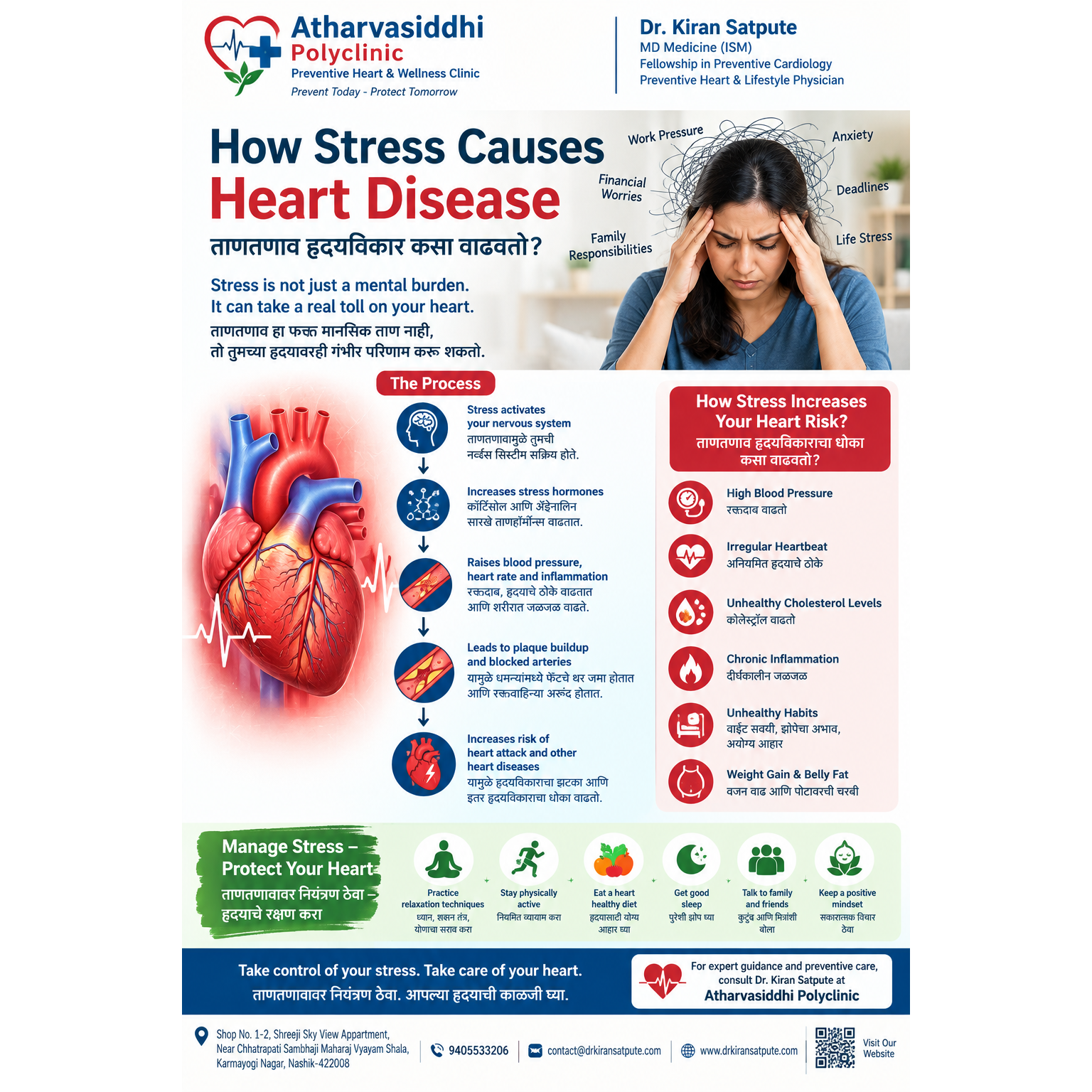
Stress is a normal response to challenging situations. Short-term stress can help us respond to danger, but frequent or prolonged stress can negatively affect cardiovascular health. When we experience chronic stress, the body repeatedly activates the “fight-or-flight” response. This increases hormones such as adrenaline and cortisol, which can raise heart rate and blood pressure. How chronic stress affects the heart 1. Increased blood pressure Persistent stress can cause repeated rises in blood pressure. Over time, uncontrolled hypertension can damage blood vessels and increase the workload on the heart. 2. Increased heart rate and cardiac workload Stress hormones can make the heart beat faster and harder. Repeated activation may place additional strain on the cardiovascular system. 3. Blood-vessel dysfunction and inflammation Chronic psychological stress is associated with changes in vascular function and inflammatory pathways. These processes can contribute to cardiovascular disease, particularly when other risk factors are present. 4. Unhealthy cholesterol and metabolic effects Long-term stress may be associated with adverse metabolic changes. The effect can be amplified when stress contributes to weight gain, physical inactivity, poor diet, or excessive alcohol intake. 5. Unhealthy lifestyle habits Stress may lead some people to: Overeat or choose unhealthy foods Smoke or use tobacco Drink excess alcohol Sleep poorly Avoid physical activity These behaviors can increase major cardiovascular risk factors such as obesity, diabetes, hypertension and abnormal cholesterol. 6. Increased cardiovascular risk When chronic stress occurs together with factors such as high BP, diabetes, high cholesterol, obesity, smoking, and poor sleep, the overall risk of cardiovascular disease can increase. Stress → Heart Risk Chronic Stress ↓ Stress hormones increase ↓ Heart rate & blood pressure rise ↓ Vascular dysfunction + inflammation ↓ Unhealthy lifestyle changes ↓ Higher cardiovascular risk How can you protect your heart? ✅ Regular physical activity ✅ 7–9 hours of good-quality sleep ✅ Balanced, heart-healthy diet ✅ Relaxation, breathing exercises, meditation or yoga ✅ Maintain a healthy weight ✅ Avoid tobacco and excessive alcohol ✅ Maintain healthy BP, blood sugar and cholesterol ✅ Stay connected with family and friends ✅ Seek professional help when stress becomes persistent or difficult to manage Important message Stress does not mean that you will develop heart disease. However, persistent stress—especially when combined with other cardiovascular risk factors—deserves attention. Manage Stress. Protect Your Heart. ताणतणावावर नियंत्रण ठेवा — आपल्या हृदयाची काळजी घ्या. For persistent stress, high blood pressure, diabetes, high cholesterol, obesity, or other cardiovascular risk factors, a structured preventive heart-health assessment can help identify and manage modifiable risks. stress management doctor in Nashik heart health doctor in Nashik preventive cardiologist in Nashik preventive heart care Nashik heart disease prevention Nashik cardiovascular risk assessment Nashik heart health checkup Nashik lifestyle disease doctor Nashik hypertension doctor Nashik diabetes and heart health Nashik cholesterol management Nashik Atharvasiddhi Polyclinic Nashik Dr Kiran Satpute Nashik


